


Not just important, crucial to the system
For over four years, both the global order and international trade have been undergoing a transformation – with far-reaching consequences for supply chains and ports worldwide. Their status is no longer regarded merely as “important” but increasingly as “crucial to the system”. With far-reaching consequences.
Credits: istockphoto/magnifier, Freepik/starline, ZDS, Bundesregierung für Wirtschaft und Energie, diebildwerft, Hansa Express Logistics, HES International, NPorts-Ulrich Wirrwa, Nports-L. Rötz
“The Russian invasion of Ukraine in February 2022 and the Covid-19 pandemic have hammered home to us just how vulnerable our security, energy and supply chain structures are,” Sebastian Jürgens, President of the Association of German Seaport Operators (ZDS), states. “Since then, the role of ports has shifted from ‘important for trade’ to ‘crucial for energy and security’.” Against this backdrop, Jürgens sees a long list of challenges that need to be addressed promptly. “At the top of the agenda is reliable and long-term port funding from the German government,” he adds. “We have a modernisation requirement of 15 billion euros in the seaports. There’s an urgent need for action here.”
Furthermore, Jürgens believes that protecting ports as critical infrastructure is just as crucial as investments in high-performance hinterland connections, digitalisation and automation. “We have to keep all this in mind if we’re to ensure our competitiveness within the European framework and, in doing so, talk about sustainably resilient structures, both for seaports and the business location,” he states. For him, the security of supply we take for granted is clearly impossible without high-performance ports. “Energy, raw materials, intermediate goods and consumer goods arrive predominantly by sea,” he continues. Stable, resilient port structures therefore constitute a direct public service – particularly in times of crisis. “To ensure the long-term efficiency of seaports,” he comments, “we need annual basic funding of 500 million euros from the German government, and that’s on top of the modernisation measures we’ve already discussed.”
He acknowledges, however, that the states and the operators have invested to the best of their ability so far. “We clearly need a coherent approach to seaports, closely coordinated between the German government and the states,” says Jürgens. “The former has to step up and take responsibility for seaports as strategic hubs of national importance far more decisively than it has done to date.” In his view, while the strategic importance of seaports has recently been recognised more widely in many places, this “isn’t yet sufficiently understood everywhere”.

Growing demands – including in military terms
For Dr Christoph Ploss (CDU), the German government’s coordinator for the maritime economy and tourism, recent developments have also changed the role of Germany’s ports fundamentally. He regards the ports as hubs, both of the economic structure and of the energy supply, as well as part of the security architecture. “Germany’s ports are key to ensuring the supply of raw materials and are increasingly becoming transshipment points for climate-friendly energy sources like ammonia, methanol, e-fuels or hydrogen,” he explains. “In the event of a crisis or war, some of them are set to become NATO hubs. They will then have to process not just troops, but also equipment, ranging from food supplies to tanks.” To make sure this runs smoothly, it is necessary to expand the infrastructure in such a way that the requirements of NATO, alliance partners and the Bundeswehr can be met. “However, we also need to gather more information as well as link and use data better, so that we can identify and thwart potential attacks on critical infrastructure before they can happen, for example,” Ploss warns.
He believes that important groundwork for advancing the transformation of the ports has already been done. “In less than a year in office, the current government has already achieved more for the maritime economy than the previous one did in its entire term,” he states. Last year, 100 billion euros were soon made available for investment in state and local-level infrastructure. Ploss adds: “I expect a considerable portion of this to be channelled into port infrastructure. Furthermore, the German government has allocated 400 million euros within the Climate and Transformation Fund (KTF) for the maritime economy. And we’ve initiated record investments in rail – over 100 billion euros will flow into the rail network by 2029. This is vital for the ports’ hinterland connections.”
Ploss considers the annual 38.3 million euros that Germany’s northern states receive from the government for port cost compensation to be insufficient. “The amount hasn’t been adjusted in two decades,” he says. “However, an increase is only possible via a constitutional amendment to German Basic Law, and the two-thirds majority required for this isn’t foreseeable, given the current balance of power in the Bundestag.” He also sees other ways to support port expansion, for instance through the special defence fund, which is providing 1.3 billion euros for the port of Bremerhaven, for example.
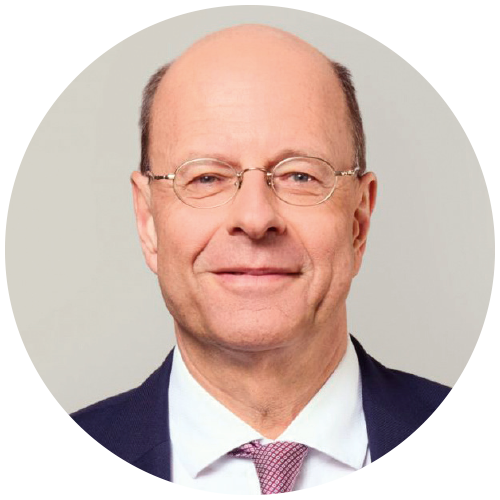
“At the top of the agenda is reliable port funding from the German government.”
Sebastian Jürgens, President of the Association of German Seaport Operators (ZDS)
In the event of a crisis or war, some German ports could become NATO hubs. They would then transport troops and equipment, ranging from food supplies to tanks.
“The port in Bremerhaven plays a central role for NATO,” he adds. “This is why the government is also providing massive support for its expansion as a NATO hub. In addition, Wilhelmshaven and Emden are important ports for Germany’s security.” Regarding Germany’s ports and referring to his 2025 statement that the rivalry between Hamburg and Bremen belongs on the football pitch rather than in politics, Ploss clarifies things from a national perspective. “Hamburg’s rivals in port policy aren’t Bremerhaven or Rostock. They’re Rotterdam, Antwerp and Gdańsk. And vice versa. The goal must be to strengthen the German port industry as a whole. In doing so, the requirements and future outlooks differ. One port becomes an energy hub, another specialises in offshore wind, the next is building up its expertise in the handling of food or industrial goods, and others become NATO hubs. In all of this, though, the one thing that’s certain is that Germany needs all these ports and their different strengths.”
Breaking the silence on military logistics
Andree Niehaus, Managing Director of Hansa-Express Logistics – an Oyten-based company that has developed into a leading logistics provider in the explosives and military sectors over the past 30 years – is clear about the current situation. “We’ve been chasing the idea of universal world peace since the 1990s, and many have turned up their noses at the prospect of investing in the military,” he says, with the NATO member states’ target of contributing two per cent of their respective gross domestic product (GDP) to collective defence particularly in mind. “To this day, we in Germany haven’t met this commitment to the required extent. In 2024, for instance, the defence budget was around 50 billion euros, plus some 20 billion euros from the special fund for modernising the Bundeswehr. However, with a GDP of 4.3 trillion euros, at least 80 billion of it should be allocated to defence. Even the special fund I just mentioned is merely a drop in the ocean,” he adds, criticising what he sees as Germany’s lack of awareness regarding the need to invest in military measures.
Nevertheless, Niehaus has recently observed a significant societal shift in attitudes and the logistics sector regarding military equipment transportation. “Before, people were always ‘We’re not going there!’,” he explains. “But now that the threat level has noticeably increased, everyone’s suddenly jumped on the bandwagon as they’ve realised that our passivity in the past was a mistake.” In his view, many are only slowly coming to realise that the transportation of goods for military purposes is “not politically incorrect”. With this in mind, he points out that, unlike in the Netherlands, for example, Germany does not maintain fleets of vehicles on standby for defence purposes. “In Germany, people aren’t prepared to pay for such contingencies yet. But I’m sure we’ll get there,” he muses.
Nevertheless, Germany’s government is generally on the right track when it comes to preparing for potential conflict. Over the past four years, for instance, it has been able to issue special permits for Sunday transport at short notice, enabling vital supplies to be delivered to Ukraine swiftly. Niehaus does not wish to specify exactly what kind of materials these are, however. For Hansa-Express Logistics, as he explains, not disclosing too much information to the public about the work, and where it takes place, is a matter of trust.
At the same time, however, he can confirm that current developments have resulted in a huge boost for logistics in the military sector. In light of recent thefts during ammunition transports, however, he condemns Germany’s prevalent penny-pinching mentality. “If civilian providers with no experience are increasingly being commissioned based on who’s cheaper,” he says, “and security staff are also being laid off to cut costs, this sends the wrong signals when working with such sensitive cargo.” He feels it would make more sense to involve experienced logistics providers, who are familiar with the subject and its challenges, at an early stage.

“Germany needs these ports and their different strengths.”
Dr Christoph Ploss (CDU), the German government’s coordinator for the maritime economy and tourism

“Now that the threat level has noticeably increased, everyone’s suddenly jumped on the bandwagon.”
Andree Niehaus, Managing Director of Hansa-Express Logistics
The HES Wilhelmshaven Tank Terminal is Germany’s largest independent tank terminal. Across an area of more than 200 hectares, 60 tanks and two tanker discharge berths are available.
Changes in the movement of oil and other cargo
For Coen Janssen, Managing Director of HES Wilhelmshaven Tank Terminal (HWTT), the changes triggered by the changing times are “manageable”. At Germany’s largest independent tank terminal, which has a storage capacity of around 1.3 million cubic metres for products such as crude oil, jet fuel, petrol and other liquid bulk goods, a shift in cargo flows has been observed in particular. “Before the Russian attack on Ukraine,” says Janssen, “most energy products and chemical-related liquid goods came in by ship and went out by ship. Now, the majority of our onward transport is by rail.” The suppliers have also changed. Whereas there had been a heavy reliance on Russian energy sources prior to 2022, these are now primarily sourced from the US and Qatar – and increasingly as decarbonised rather than fossil fuels. “In my view, however, this development is due more to the shift in political focus towards renewable energy and climate-neutral technologies than to the changing times,” he adds.
As part of this transformation, Europe’s liquefied natural gas infrastructure has also grown significantly. “In this context, Wilhelmshaven has developed into a genuine energy hub,” continues Janssen. “Indeed, our city on the north-western coast of the Jade Bay became home to Germany’s first LNG terminal in December 2022 and, in May 2025, commissioned the ‘Excelsior’ as the second Floating Storage and Regasification Unit (FSRU) alongside the ‘Höegh Esperanza’.” The HWTT is also noticing the growing trend towards LNG. “In particular, liquefied gas shipments to southern Germany, Poland and the Czech Republic have increased significantly in recent years,” he concludes.
“We’re committed to further diversifying our business as part of the energy transition,” says Janssen, looking ahead to the company’s future development. “In doing so, we’re making a meaningful contribution to the Federal Republic of Germany’s decarbonisation targets in line with the European Green Deal.” However, the steadily growing number of cyberattacks on companies and the classification of ports as critical infrastructure are enough to cause a few grey hairs. “With a combination of preventive technical measures and a strengthened safety culture, however, we’re well prepared,” states Janssen. However, no structural changes have been made to the tanks and pipelines yet. (bre)

“Wilhelmshaven has developed into a genuine energy hub.”
Coen Janssen, Managing Director of HES Wilhelmshaven Tank Terminal (HWTT)