REQUEST THE MAGAZINE

Logo German Ports
Magazine for ports, shipping and logistics

New deep-freeze warehouse for the “Cool Corridor”

06.09.2024

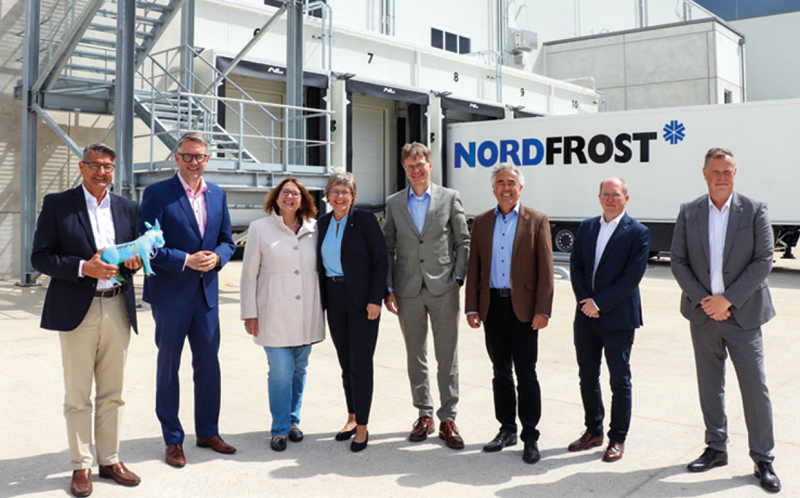
SCHORTENS/WESEL. Nordfrost opened its new deep-freeze facilities in Wesel am Niederrhein in early July. The premises, which can accommodate roughly 25,000 multi-temperature pallet bays, play a key part in Nordfrost’s “Cool Corridor” concept. The plan is now to store refrigerated containers on the Rhine, which were previously mainly transported by truck to the western ports of Rotterdam and Antwerp. “Customers save more than 65 per cent of CO2 on every container by shifting transport to the waterway alone,” stated Branch Manager Carsten Fricke.

Credits: Nordfrost
More articles from the category Community News

ZDS and DGB welcome Ploß’s proposal on special funds

ZDS and DGB welcome Ploß’s proposal on special funds

HAMBURG. The proposal by Maritime Coordinator Christoph Ploß to extend the Infrastructure Special Fund to include seaports and waterways met with broad approval from the Central Association of German Seaport Operators (ZDS) and the German Trade Union Confederation...

read more
BLG LOGISTICS receives SBTi Validation Once Again

BLG LOGISTICS receives SBTi Validation Once Again

BREMEN. BLG LOGISTICS has once again had its climate targets officially validated by the Science Based Targets initiative (SBTi) – with significantly more ambitious reduction targets than those set during the initial validation in 2020.

read more
ZDS and DGB welcome Ploß’s proposal on special funds

ZDS and DGB welcome Ploß’s proposal on special funds

HAMBURG. The proposal by Maritime Coordinator Christoph Ploß to extend the Infrastructure Special Fund to include seaports and waterways met with broad approval from the Central Association of German Seaport Operators (ZDS) and the German Trade Union Confederation...

read more
BLG LOGISTICS receives SBTi Validation Once Again

BLG LOGISTICS receives SBTi Validation Once Again

BREMEN. BLG LOGISTICS has once again had its climate targets officially validated by the Science Based Targets initiative (SBTi) – with significantly more ambitious reduction targets than those set during the initial validation in 2020.

read more