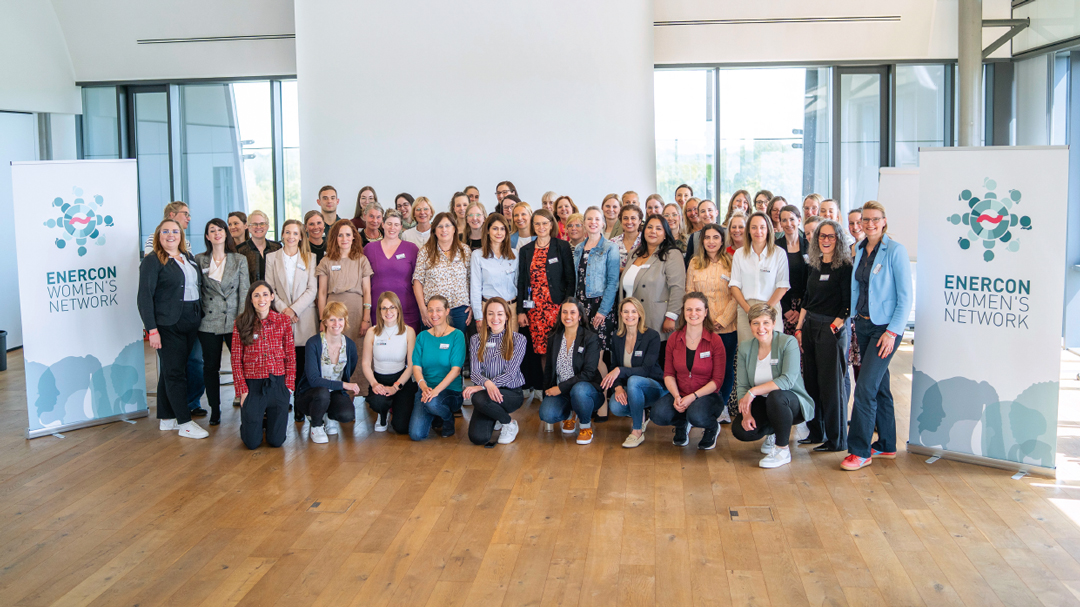
Unfortunately, sexism is alive and well. Comments like “Unloading the dishwasher is a woman’s job” and “All you have to do to get your way is bat your eyelashes” are still all too common at many companies today. The ENERCON Women’s Network has put together a comprehensive package of measures to prevent these from taking hold at ENERCON.
ENERCON CEO Udo Bauer is quick to agree: “People are at the heart of everything our company does. Equal opportunity regardless of gender, age, cultural background, disability and orientation should be a given – from both an ethical and economic point of view.” According to Lea-Maria Sandker, Head of Global HR: “As part of the ENERCON sustainability strategy, we’re working on several initiatives to promote diversity and equal opportunity. The women’s network serves as a valuable sparring partner and provides access to women’s perspectives.”
The network is clearly structured, with a core team of four people at the top who manage all the activities in coordination with the management and HR. Below them there are four working groups – antidiscrimination and inclusion, career development, networking and events, and work-life balance – which are in charge of concrete projects and key responsibilities. The two levels maintain contact with each other and the members at all times. “Our aim is to create a visible community that enables the knowledge and experience to be shared as well as strengthening women at our company,” explains Hirsch.
An awareness campaign on discriminatory language at the workplace, which was linked to a digital Advent calendar, received a great deal of attention in late 2025 and is the source of the quotes used at the beginning of the article. Every day from 1 to 24 December, the network also provided exciting background information as well as recommendations for how women should respond in such situations – for example, by setting clear boundaries, demanding accountability and addressing the inappropriate behaviour directly.
Hirsch recalls a conversation with a male colleague who, during a tender process, said, “We need a strong man in this position.”“He didn’t mean anything by it,” says Hirsch. “I always respond immediately to comments like this in a friendly way – ideally with a pinch of humour and without making accusations.” In that situation, Hirsch asked the colleague in question if a strong woman would be too strong for the position. In her experience, this usually results in a brief silence, followed by a moment of realisation and then an engaging and often clarifying conversation. This demonstrates what many psychological studies have found: language influences the way we think and our decisions, often without our knowledge. Terms and formulations have an impact on how we perceive roles, abilities and opportunities – and thus the reality we create together.
For this reason, the women’s network is eager to involve men to a higher degree. “We view ourselves as an inclusive network that invites everyone to work on solutions together. It’s not about ‘women against men’. On the contrary. Men are part of our work environment, and in most cases they support us,” says Hirsch. “But they often have a different perception of the challenges women face every day. And that’s why we’re interested in creating awareness and sensitivity as well as including their perspectives and ideas when it comes to implementing measures. After all, it’s only by working together to affect change that we can create a sustainable culture.”
The ENERCON Women’s Network has also been expanding its activities beyond the company’s borders. For example, it joined the women of new energies (w.one) network last year, allowing female ENERCON employees to take advantage of coaching by external mentors. “Together, we’re committed to improving visibility and equal opportunity for women in the renewable energies sector,” says Hirsch.
Looking to the future, ENERCON and the Women’s Network have set their sights on some quantitative aims. As part of the company-wide sustainability strategy, the management have committed themselves to increasing the percentage of women in management roles to 25 per cent by 2030. With women currently accounting for approximately 17 per cent of company staff and around twelve per cent of management, the company has a lot of work ahead of itself. Building on the momentum of this collaboration, all the participants also want to create conditions for sustainable structural changes that ultimately allow them not only to achieve their aim but also create a culture that boosts diversity over the long term. (bre)
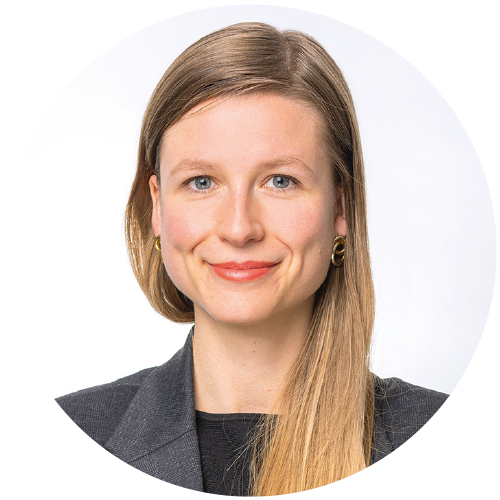
“We can only create a sustainable culture together.”
Katharina Hirsch, Senior Manager Corporate Strategy at ENERCON