REQUEST THE MAGAZINE

Logo German Ports
Magazine for ports, shipping and logistics

Modernisation of onshore power plants

05.12.2022
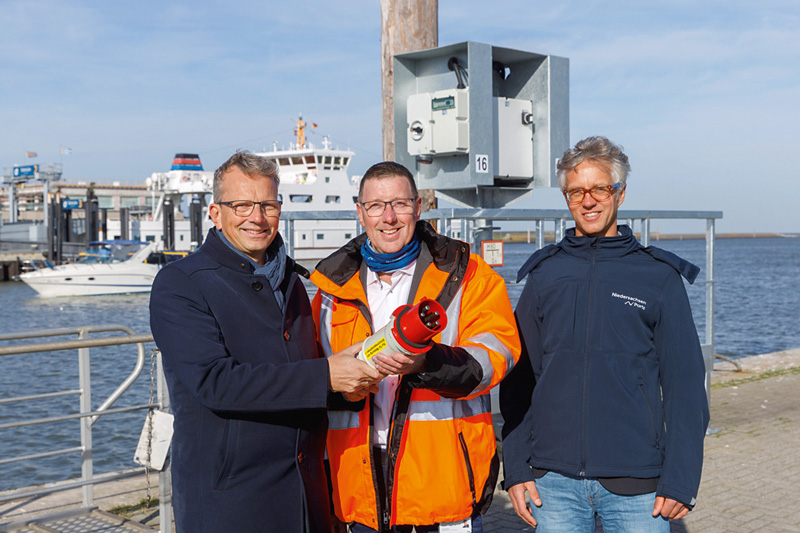
NORDEN. The onshore power plant project in Norddeich came to a successful conclusion in October. The onshore power connections at the berths in the Osthafen have been reinforced and modernised, to ensure a continual reliable energy supply for ships berthed there. The project cost 300,000 euros, of which 175,000 euros were funded directly by NPorts and 125,000 euros came from the BMWK funding programme: “administrative agreement between the federal and state governments on the granting of financial aid for building onshore power plants”.

Credits: NPORTS/ANDREAS BURMANN

More articles from the category Community News

ZDS and DGB welcome Ploß’s proposal on special funds

ZDS and DGB welcome Ploß’s proposal on special funds

HAMBURG. The proposal by Maritime Coordinator Christoph Ploß to extend the Infrastructure Special Fund to include seaports and waterways met with broad approval from the Central Association of German Seaport Operators (ZDS) and the German Trade Union Confederation...

read more
BLG LOGISTICS receives SBTi Validation Once Again

BLG LOGISTICS receives SBTi Validation Once Again

BREMEN. BLG LOGISTICS has once again had its climate targets officially validated by the Science Based Targets initiative (SBTi) – with significantly more ambitious reduction targets than those set during the initial validation in 2020.

read more
ZDS and DGB welcome Ploß’s proposal on special funds

ZDS and DGB welcome Ploß’s proposal on special funds

HAMBURG. The proposal by Maritime Coordinator Christoph Ploß to extend the Infrastructure Special Fund to include seaports and waterways met with broad approval from the Central Association of German Seaport Operators (ZDS) and the German Trade Union Confederation...

read more
BLG LOGISTICS receives SBTi Validation Once Again

BLG LOGISTICS receives SBTi Validation Once Again

BREMEN. BLG LOGISTICS has once again had its climate targets officially validated by the Science Based Targets initiative (SBTi) – with significantly more ambitious reduction targets than those set during the initial validation in 2020.

read more