Some talk of collaborations and networks, others of alliances. Regardless of the terminology used, the underlying concept is always one of pooling strengths – for example, sharing risks, reducing costs or accessing new markets. Especially in times of complex global challenges, such as those we face today, this type of collaboration seems to be developing into an efficient (survival) strategy.
One year on, Luedeke’s assessment is equally positive. “The cooperation has delivered exactly what we hoped for,” he adds. “Significantly higher schedule reliability, noticeably fewer port omissions and a clear improvement in overall service quality. Our schedule reliability of 90 per cent sets new standards in the industry.” Furthermore, additional upgrades are planned for this year without altering the existing coverage. These include a further port call in Wilhelmshaven, which has been integrated into the partners’ Indian Ocean Service (IOS) since late January 2026.
Praise for the Gemini Cooperation
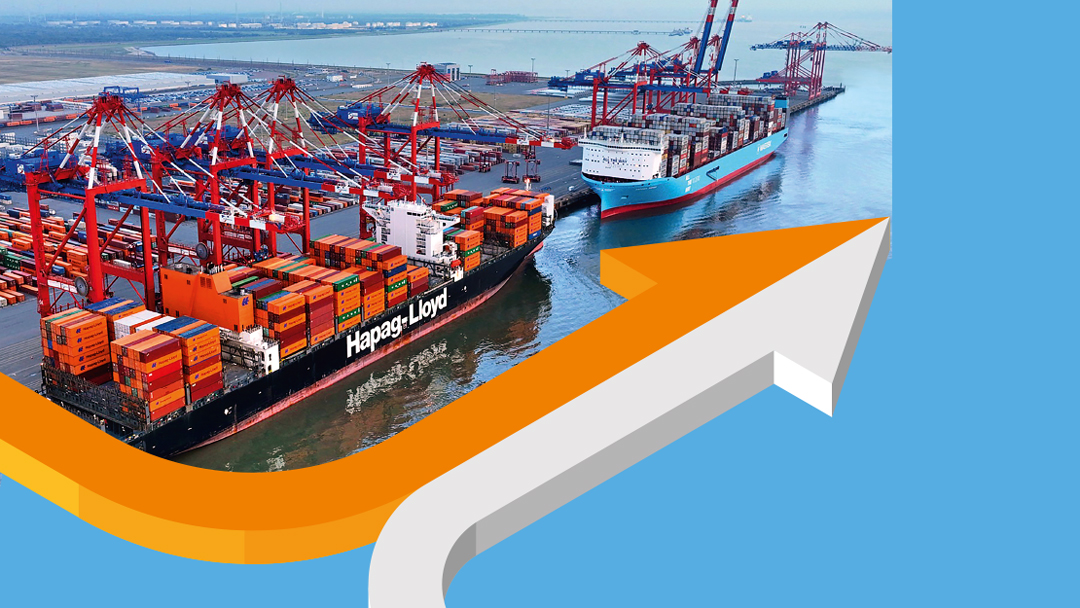
Even before the Gemini Cooperation was launched, Hapag-Lloyd Chief Executive Officer Rolf Habben Jansen predicted that the partnership would lead to “an overall positive development” in cargo volumes at German ports. The current analysis seems to confirm this statement. “It’s clear that Hapag-Lloyd is highly committed to JadeWeserPort,” says NPorts Managing Director Holger Banik. “The Gemini Cooperation’s calls have significantly increased our transshipment figures.” He emphasises this further by noting that Wilhelmshaven is the “first port of call” from China to Europe for many of the Gemini Cooperation’s services. “This decision by the partners, as well as the christening and naming of the Hapag-Lloyd container ship Wilhelmshaven Express at JadeWeserPort in October 2025, are strong signals of appreciation for Germany’s only deep-water port,” Banik adds.
Steffen Leuthold, Head of Corporate Communications at EUROGATE, has observed the Gemini Cooperation’s positive influence across several sites. “In general, we can say that the 2025 financial year was a thoroughly positive one for EUROGATE,” he states. “A key driver of this development was the newly formed Gemini Cooperation, which has selected two of our terminals, EUROGATE Container Terminal Wilhelmshaven and North Sea Terminal Bremerhaven, as international hub ports in its network and is also generating significantly more throughput at these locations. However, our EUROGATE terminals in Bremerhaven and Hamburg are also benefiting from this new partnership as common user hubs, as are other shipping line customers and alliances.”
“The quality of cooperation at the interfaces is crucial”
Matthias Magnor has been Chief Executive Officer (CEO) of the seaport and logistics service provider BLG LOGISTICS since early 2025. “Stable networks and partnerships are strategic levers for us,” he states confidently. “In complex supply chains, it’s not only operational excellence that counts, but also the quality of cooperation at the interfaces.” Accordingly, his company regularly enters into long-term, trust-based partnerships along the entire supply chain – with industry and trade, shipping companies, terminal and infrastructure partners, and with technology providers.
Last year, for example, the door-to-door transportation of a state-of-the-art wood press from Bremen across the Atlantic to the USA demonstrated how such partnerships operate. Plant constructor Siempelkamp provided logistics management for the international transport of complex plant components, while project freight forwarder UTC Overseas managed the sea freight and delivery of the item from the port in Longview to the Roseburg construction site in Oregon. PTS Logistics ensured that the fragile components were packed appropriately for transport by sea, and BLG LOGISTICS oversaw the central transshipment at Neustädter Hafen. BBC Chartering handled the subsequent overseas transport, bringing the entire cargo across the Atlantic in a single charter with its heavy‑lift vessel BBC Aquamarine.
“Such collaboration only works if responsibility is taken, information is shared openly and decisions are made transparently. Cooperation based on mutual respect isn’t merely an option, it’s a prerequisite,” Magnor concludes, not only reflecting on this 10,000‑tonne freight logistics shipment, but also with an eye on the group’s future projects.
“The complexity of global supply chains has increased significantly in recent years.”
Axel Luedeke, Managing Director Network and Cooperations at Hapag-Lloyd
“These are strong signals of appreciation for Germany’s only deep-water port.”
Holger Banik, Managing Director, JadeWeserPort-Realisierungs GmbH & Co. KG
Developing and promoting new solutions together
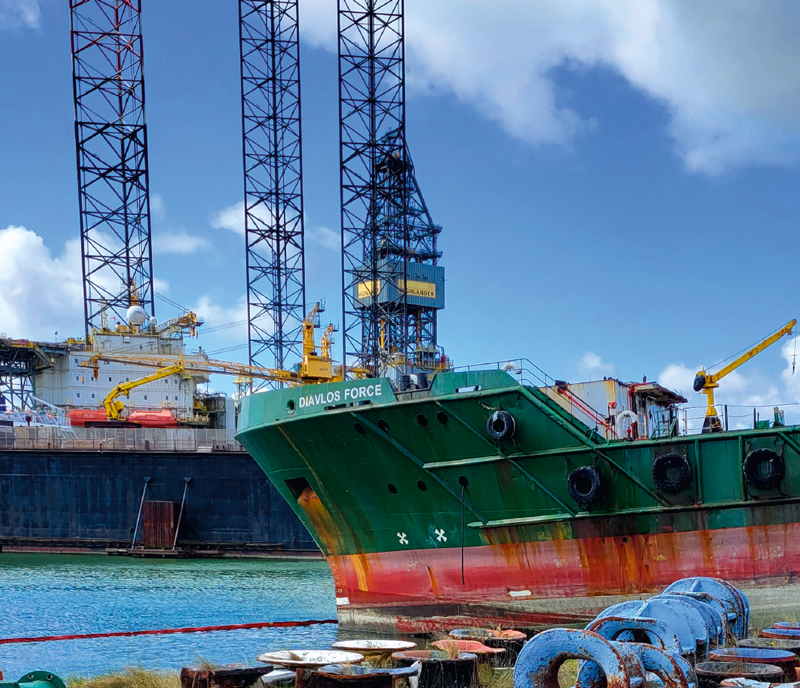
In 2011, the German states of Hamburg, Lower Saxony and Schleswig-Holstein have jointly formed the Maritime Cluster Northern Germany (MCN). Bremen and Mecklenburg-Western Pomerania followed three years later. “Our network now has more than 350 members working together across all five states and covering the entire spectrum of the maritime industry,” reports Dr Susanne Neumann, head of the MCN office in Lower Saxony. As an example of successful cooperation under the umbrella of MCN, she cites ShipRec, a ZIM innovation network that was launched in 2024 as an expert platform for sustainable ship recycling with the active support of the EurA network agency and comprises more than 14 network partners besides MCN. These include Turbo‑Technik, GSR Services, EWD Benli Recycling, HB Hunte Engineering, BIBA – Bremen Institute for Production and Logistics, and the Leibniz Centre for Tropical Marine Research (ZMT). All are committed to developing a viable German alternative to the inadequate conditions under which end-of-life ships are often dismantled in low‑income countries.
“The ShipRec network is a central platform for the maritime community to promote innovation, technologies and projects that advance a more sustainable ship recycling industry. We’ve taken this task on because, among other things, the importance of ship recycling for the extraction of secondary raw materials for the steel industry has grown rapidly in recent years,” emphasises Andreas Born, head of the MCN office in Bremen. “A study was conducted in Bremen in 2023 that identified a ship recycling potential of 20 to 25 ships per year, which equates to around 10 to 15 per cent of ArcelorMittal’s steel scrap requirements in Bremen,” he adds.
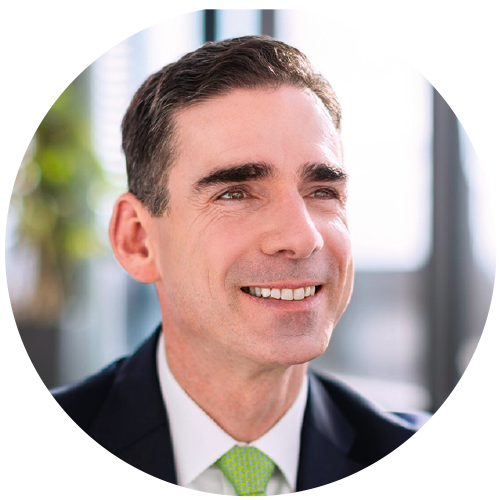
“Cooperation based on mutual respect isn’t merely an option, it’s a prerequisite.”
Matthias Magnor, Chief Executive Officer (CEO) of BLG LOGISTICS

“The work highlights the need for ongoing dialogue between partners.”
Dr Susanne Neumann, head of the MCN office in Lower Saxony
Good contacts and guaranteed success
For Captain Arne Ehlers, Chairman of the Cuxhaven Port Industry Association (HWG) and Managing Director of the BREB shipping company and port service provider Blue Water BREB, the strategy of focusing on cooperation is hardly new. “Trade and shipping have always thrived on good international contacts and forming the corresponding alliances,” he says. His view of the concept of cooperation is much broader than that of his predecessors. “All port-specific developments in Cuxhaven have been initiated collaboratively and with broad consensus,” he praises. “I’m not just talking about politics, the economy and society here, but the administration in particular. NPorts is doing an excellent job in Cuxhaven. A prime example is the construction of the German Offshore Industry Centre there, which includes berths 8 and 9.1 to 9.5. Furthermore, the current expansion of berths 5 to 7 will reinforce Cuxhaven’s position as a key hub for the offshore wind industry still further.”
He then vividly describes a variety of successful collaborations in Cuxhaven, touching on RoRo traffic, wind turbines, project cargo, and even the town’s role as a fishing hub. He has also been closely involved in developing Blue Water BREB. The joint venture between the German shipping company BREB and the Danish logistics expert Blue Water Shipping was founded in 2016 under his leadership and has since specialised in carrying wind power components and project cargo. “I remember how many people shook their heads at the time when both partners held a 50 per cent stake in the venture,” recounts Ehlers. “But our experience in recent years has shown how advantageous it is when important business decisions are made strictly in tandem, with no one being overruled.”
The port representative also considers the UK service jointly operated by DFDS and Rhenus Cuxport to be a successful project. This short sea shipping service stems from the 1970s. The commissioning of the Cuxport terminal in 1997 took cooperation in the RailRoCargo sector to a new level and developed it into the most successful shipping line between Germany and the United Kingdom – with up to eight departures per week. “The capabilities of DFDS as one of the largest and leading short sea operators in Northern Europe and of Rhenus Cuxport as a multimodal terminal on the German North Sea coast go hand in hand for shipping all kinds of goods to the UK,” adds Ehlers. “If I can be part of a successful merger, then I’ll definitely get my share of the rewards, which should be enough to dispel the concerns many opponents of the merger have,” he continues with a wry smile. “Otherwise, I might just end up with nothing at all.” (bre)
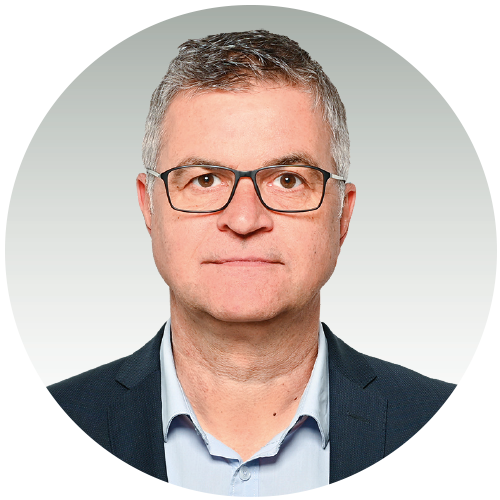
“The ShipRec network is a central platform for the maritime community.”
Andreas Born, head of the MCN office in Bremen
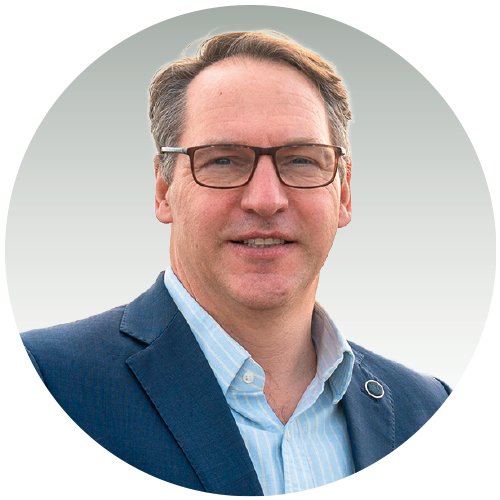
“Important business decisions are made strictly in tandem.”
Captain Arne Ehlers, Chairman of the Cuxhaven Port Industry Association (HWG)