REQUEST THE MAGAZINE

Logo German Ports
Magazine for ports, shipping and logistics

Second LNG terminal goes into operation

04.09.2025

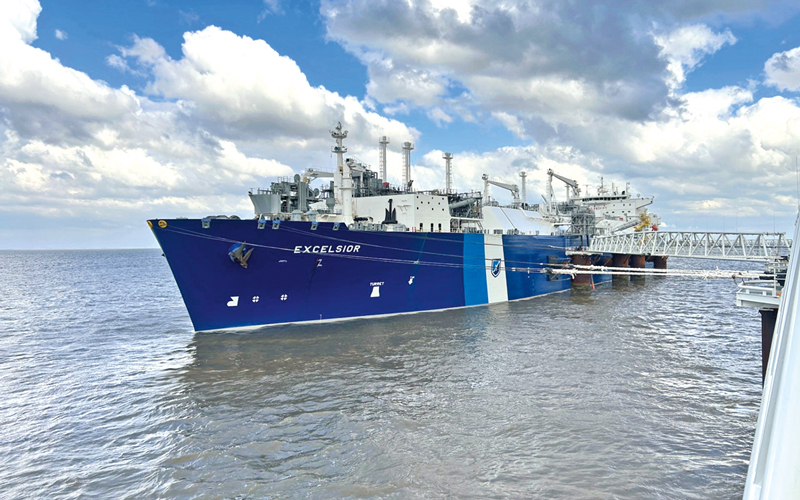
WILHELMSHAVEN. In May, the Deutsche Energy Terminal GmbH (DET) commissioned its second import terminal for LNG. According to a statement issued at the start of operations: “Germany can now make its energy supply even more secure and flexible”. Commissioned by DET, the project partners Engie Deutschland and Tree Energy Solutions only required roughly half the amount of time that is normally needed, on average, for similar major LNG projects. The floating storage and regasification unit “Excelsior” is expected to feed up to 1.9 billion cubic metres of gas into the German supply network in 2025.

Credits: DET

More articles from the category Community News

Sustainable lighting as an experience

Sustainable lighting as an experience

NORDDEICH Artificial lighting at night has far-reaching effects on humans, animals, and the environment. The international research project “Darker Sky” has therefore set itself the goal of developing innovative and sustainable lighting solutions.

read more
Resilience as a guiding principle

Resilience as a guiding principle

BREMEN. Bremen and Bremerhaven are preparing their ports for the consequences of climate change. With the state’s updated climate adaptation strategy, the key measure “Land 7 – resilient ports” was adopted at the end of 2025.

read more
Sustainable lighting as an experience

Sustainable lighting as an experience

NORDDEICH Artificial lighting at night has far-reaching effects on humans, animals, and the environment. The international research project “Darker Sky” has therefore set itself the goal of developing innovative and sustainable lighting solutions.

read more
Resilience as a guiding principle

Resilience as a guiding principle

BREMEN. Bremen and Bremerhaven are preparing their ports for the consequences of climate change. With the state’s updated climate adaptation strategy, the key measure “Land 7 – resilient ports” was adopted at the end of 2025.

read more