Due to their position at the interface between land and sea, German ports are uniquely affected by climate change. Rising sea levels and extreme weather events like flooding, torrential rain and heatwaves, in particular, represent significant challenges for port locations.
“The first concept was then developed on the basis of the first climate adaptation strategy, with the aim of climate-proofing Bremen ports,” explains Lena Lankenau, a member of the Environment and Sustainability team at bremenports and Deputy Director of the KlimaHafen specialist forum of Hafentechnische Gesellschaft (HTG). “Current and future climate risks, adaptation requirements and potential implementation timelines were identified in the process.” Key findings from this concept development process were incorporated into the revised climate adaptation strategy. “The most important points contained therein include systematic integration of climate adaptation into the port strategy, planning and operation, establishment of methods for monitoring climate change and exposure to it, and quantification of the financial impact of climate risks,” adds Lankenau. For her, it is just as important to promote the awareness and individual responsibility of all the relevant actors in the Bremen port industry, to network with other port locations and to strengthen knowledge exchange. According to Robert Howe, bremenports Managing Director: “Climate adaptation is not a once-and-done project, but an ongoing responsibility that we approach in collaboration with all the port actors.”
Besides compiling climate baseline data, Bremen ports have also laid the groundwork and initiated concrete measures for counteracting climate change-related risks. For example, flood control facilities like the Geeste flood barrier and the riverside quay in Bremerhaven have been updated to handle rising sea levels. Further, efforts are being made to ensure sufficient tug capacities and create additional berths for these workboats, as there is a growing demand for tugs to manoeuvre large container ships safely through the port on windy days in Bremerhaven.
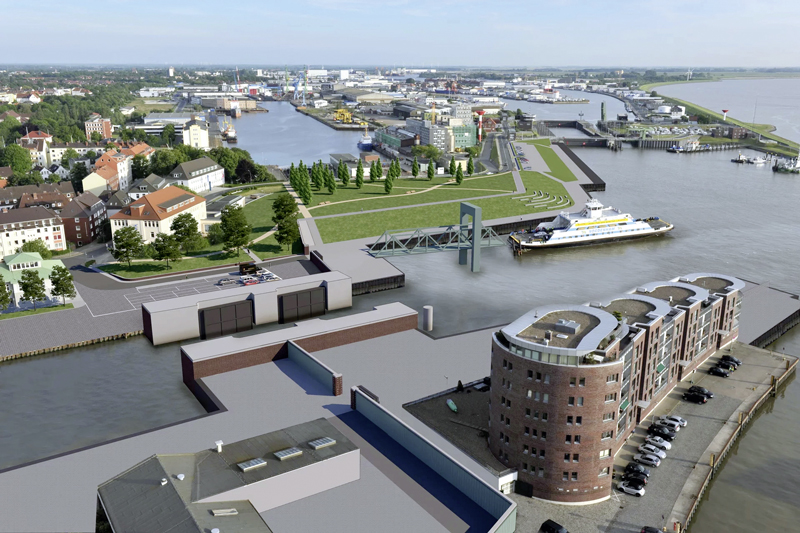
,highlighting bremenports’ role in the battle against climate change. “We’ve been commissioned by the Free Hanseatic City of Bremen to oversee port infrastructure in Bremerhaven and Bremen. This includes maintaining locks, technical facilities and water depths, and ensuring that Bremische Hafeneisenbahn tracks function properly. For other matters, including terminal space and hinterland logistics, we have to coordinate these with the partners responsible. Consequently, we rely on effective collaboration with all partners and need to meet external planning deadlines, meaning we can’t always work as quickly as we’d like.”
But Lankenau also sees a benefit in this key function when it comes to promoting collaboration between all the port actors, from port operation and administration to shipping and railway. “There are no risks for Bremen ports for the time being. But it never hurts to anticipate potential handling options early on and simulate them together. After all, it’s only by bundling knowledge and sharing responsibility that we can ensure that Bremen port locations remain efficient, secure and sustainable in the future.” She is quick to push back against sceptics: “The best preparation for minimising the economic, environmental and social risks of climate change is still real climate protection.” (bre)

“Climate adaptation is not a once-and-done project, but an ongoing responsibility.”
Lena Lankenau, member of the Environment and Sustainability team at bremenports