REQUEST THE MAGAZINE

Logo German Ports
Magazine for ports, shipping and logistics

Promoting the construction of a second bascule bridge

04.11.2025
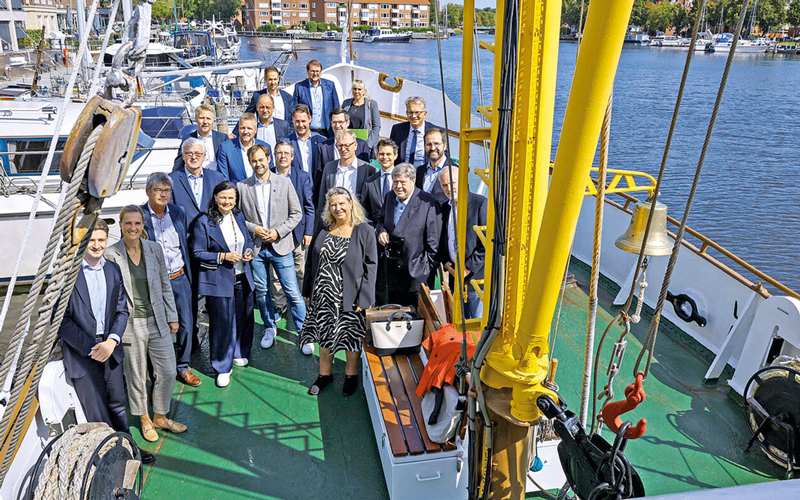
EMDEN. Plans for a second railway bascule bridge in Emden are set to take off again. Christoph Ploß, Maritime Economy Coordinator for the German government, and Gitta Connemann, CDU Member of Parliament, emphasised this goal during a visit to the Emden Port Development Company (EHFG). The bridge is particularly important for vehicle handling in the port “because all vehicles transported by rail pass through this bottleneck – both for exports and imports to the European market,” explained EHFG Deputy Chairman Manfred de Vries.

Credits: EHFG

More articles from the category Community News

ZDS and DGB welcome Ploß’s proposal on special funds

ZDS and DGB welcome Ploß’s proposal on special funds

HAMBURG. The proposal by Maritime Coordinator Christoph Ploß to extend the Infrastructure Special Fund to include seaports and waterways met with broad approval from the Central Association of German Seaport Operators (ZDS) and the German Trade Union Confederation...

read more
BLG LOGISTICS receives SBTi Validation Once Again

BLG LOGISTICS receives SBTi Validation Once Again

BREMEN. BLG LOGISTICS has once again had its climate targets officially validated by the Science Based Targets initiative (SBTi) – with significantly more ambitious reduction targets than those set during the initial validation in 2020.

read more
ZDS and DGB welcome Ploß’s proposal on special funds

ZDS and DGB welcome Ploß’s proposal on special funds

HAMBURG. The proposal by Maritime Coordinator Christoph Ploß to extend the Infrastructure Special Fund to include seaports and waterways met with broad approval from the Central Association of German Seaport Operators (ZDS) and the German Trade Union Confederation...

read more
BLG LOGISTICS receives SBTi Validation Once Again

BLG LOGISTICS receives SBTi Validation Once Again

BREMEN. BLG LOGISTICS has once again had its climate targets officially validated by the Science Based Targets initiative (SBTi) – with significantly more ambitious reduction targets than those set during the initial validation in 2020.

read more