REQUEST THE MAGAZINE

Logo German Ports
Magazine for ports, shipping and logistics

New heavy cargo warehouse gets its own railway connection

01.12.2020

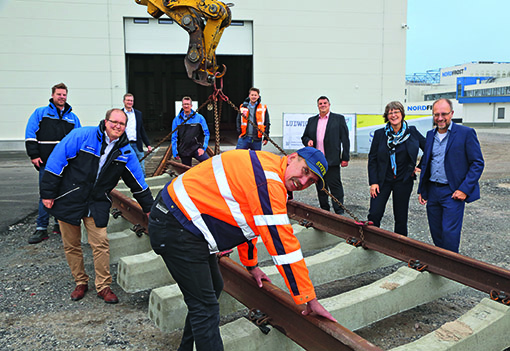
WILHELMSHAVEN. In September, the new, 8,000 square metre heavy cargo warehouse was inaugurated by Nordfrost in Wilhelmshaven. The festivities were accompanied by the start of work on laying a track for Nordfrost’s own railway connection. The track will run right through the heavy cargo warehouse, so that arriving components can be transported directly into the warehouse by rail. Roof cranes will then unload and handle the goods. The three bays are currently equipped with cranes with a capacity of up to 120 tonnes.

Photo: Nordfrost

More articles from the category Community News

ZDS and DGB welcome Ploß’s proposal on special funds

ZDS and DGB welcome Ploß’s proposal on special funds

HAMBURG. The proposal by Maritime Coordinator Christoph Ploß to extend the Infrastructure Special Fund to include seaports and waterways met with broad approval from the Central Association of German Seaport Operators (ZDS) and the German Trade Union Confederation...

read more
BLG LOGISTICS receives SBTi Validation Once Again

BLG LOGISTICS receives SBTi Validation Once Again

BREMEN. BLG LOGISTICS has once again had its climate targets officially validated by the Science Based Targets initiative (SBTi) – with significantly more ambitious reduction targets than those set during the initial validation in 2020.

read more
ZDS and DGB welcome Ploß’s proposal on special funds

ZDS and DGB welcome Ploß’s proposal on special funds

HAMBURG. The proposal by Maritime Coordinator Christoph Ploß to extend the Infrastructure Special Fund to include seaports and waterways met with broad approval from the Central Association of German Seaport Operators (ZDS) and the German Trade Union Confederation...

read more
BLG LOGISTICS receives SBTi Validation Once Again

BLG LOGISTICS receives SBTi Validation Once Again

BREMEN. BLG LOGISTICS has once again had its climate targets officially validated by the Science Based Targets initiative (SBTi) – with significantly more ambitious reduction targets than those set during the initial validation in 2020.

read more