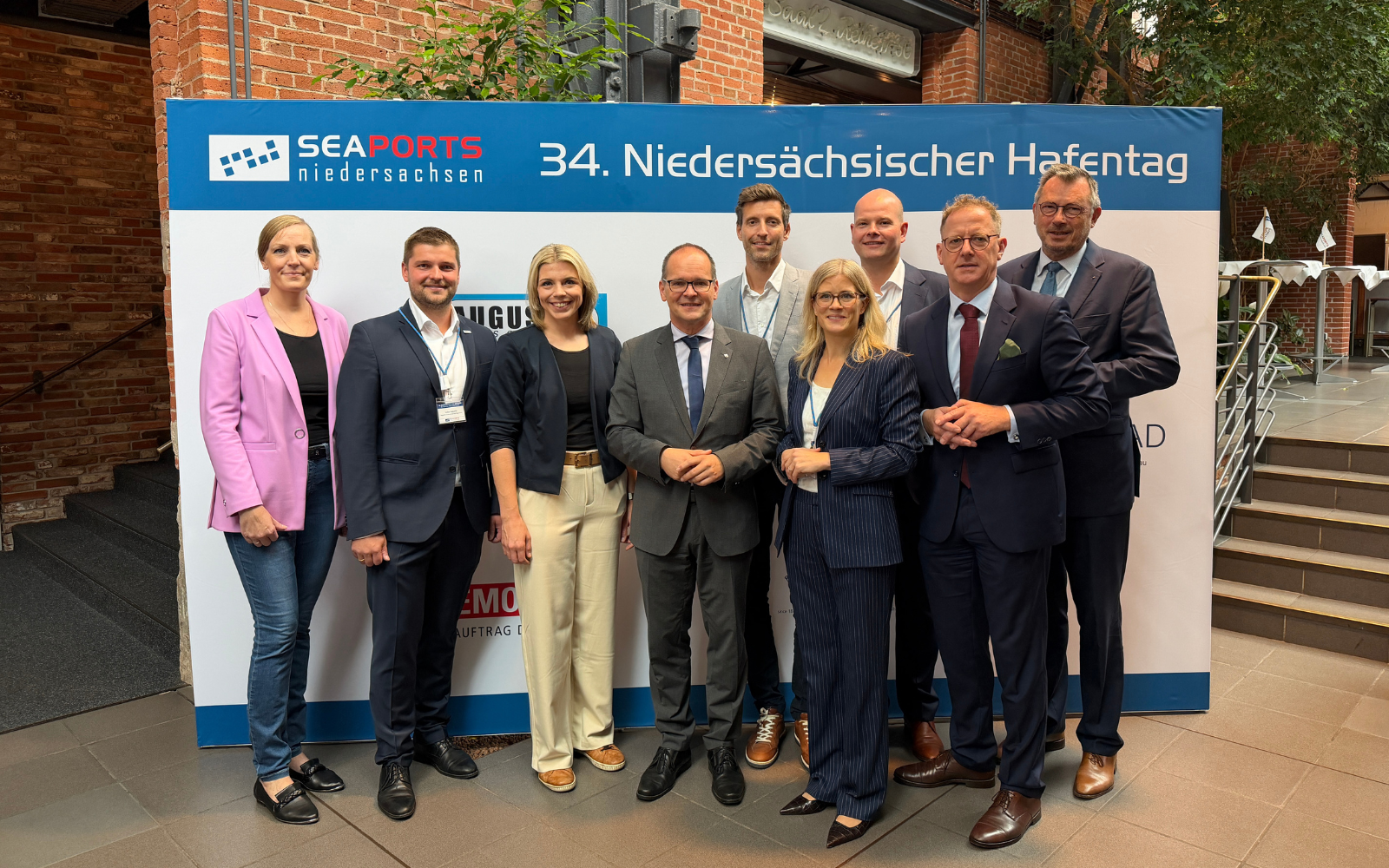
PAPENBURG At the 34th Niedersächsischen Hafentag in Papenburg, the megatrend of the circular economy was placed firmly in the focus of the Lower Saxony port industry. In light of global crises and new EU regulations, demand for secondary raw materials is increasing, opening up new market opportunities for seaports.
There is no doubt that ports play a central role in the transition towards a more circular use of raw materials and in ensuring security of supply in Germany. Impressive examples of best practice from Papenburg demonstrated how sustainability and the circular economy are already contributing to future-oriented logistics chains today. At the same time, it became clear that opportunities and challenges are closely intertwined when it comes to market development. Major legislative initiatives such as the EU Circular Economy Act must be implemented in a practical manner and, in particular, be reasonably applicable to small and medium-sized enterprises.
Photo, from left to right: Vera Butterweck-Kruse (Shareholder, Butterweck Rundholzlogistik GmbH & Co. KG), Lukas Augustin (Managing Director, Augustin Entsorgung Holding GmbH), Mayor Vanessa Gattung (City of Papenburg), Minister for Economic Affairs Grant Hendrik Tonne, Maximilian Ueberschaar (Managing Director, ProRC GmbH), Inke Onnen-Lübben (Managing Director, Seaports of Niedersachsen GmbH), Dirk Wobken (Head of Site Development, Meyer Werft GmbH), Michael de Reese (Spokesperson, Association of Lower Saxony Seaports) and Herwart Wilms (President of FEAD & Chairman of the BDI Committee on Raw Materials Policy).
Photo: Meinen & Eden Fotografie